

An Update from the Texas Horned Lizard Project
***The following is our second post from Wild Lens volunteer Rachel Granberg, who is studying the Texas Horned Lizard as a part of her Master’s research at Texas Tech University. Rachel will be working with us throughout her field season to document the progress of her research and it’s impact on conservation of this species – stay posted for more updates from this unique project!***
With much-needed rains inundating the field site this week, I was unsurprised there were no new lizards encountered. I’m currently tracking 2 adult Texas horned lizards, 1 male and 1 gravid female. Very soon, I should have enough data on each of these guys to establish preliminary home ranges for each of them.
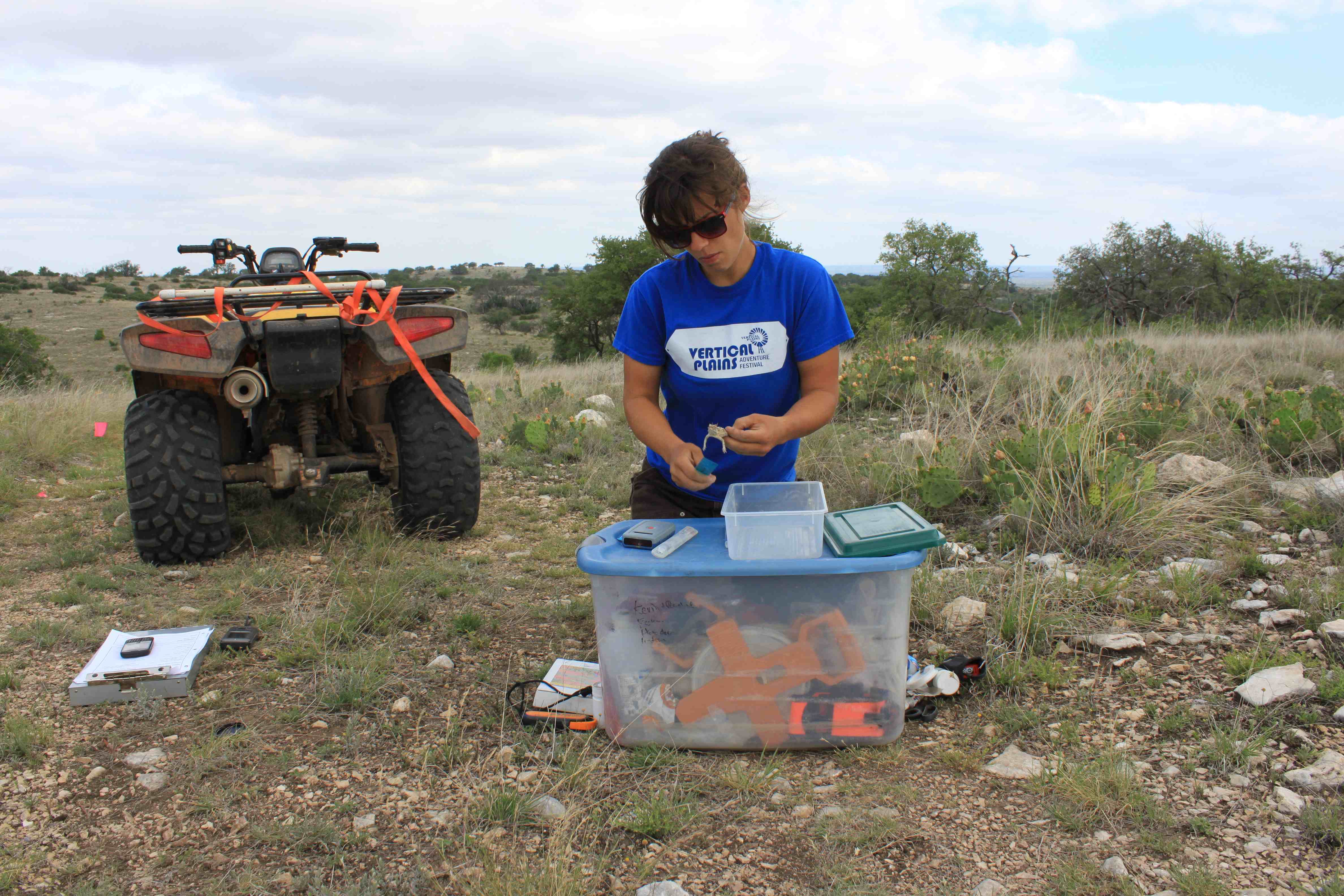
Rachel measuring SVL (snout-vent length) on the gravid female she has been tracking. Photo: R. Granberg
The male is demonstrating typical behavior for males at this time of year. His movements are wide-ranging; he is searching for mates and must cover a lot of ground to do so. The gravid female is also behaving normally for her state. Horned lizards can double in weight when carrying young, which can reduce the distances they move (it’s hard work!). This little lady has been parked in the middle of 3 Harvester ant colonies, an area of about 25 meters squared, for the week. Any reduction in energy expenditure will reduce the amount of time she needs to spend foraging and consequently, time spend with increased risk of predation.
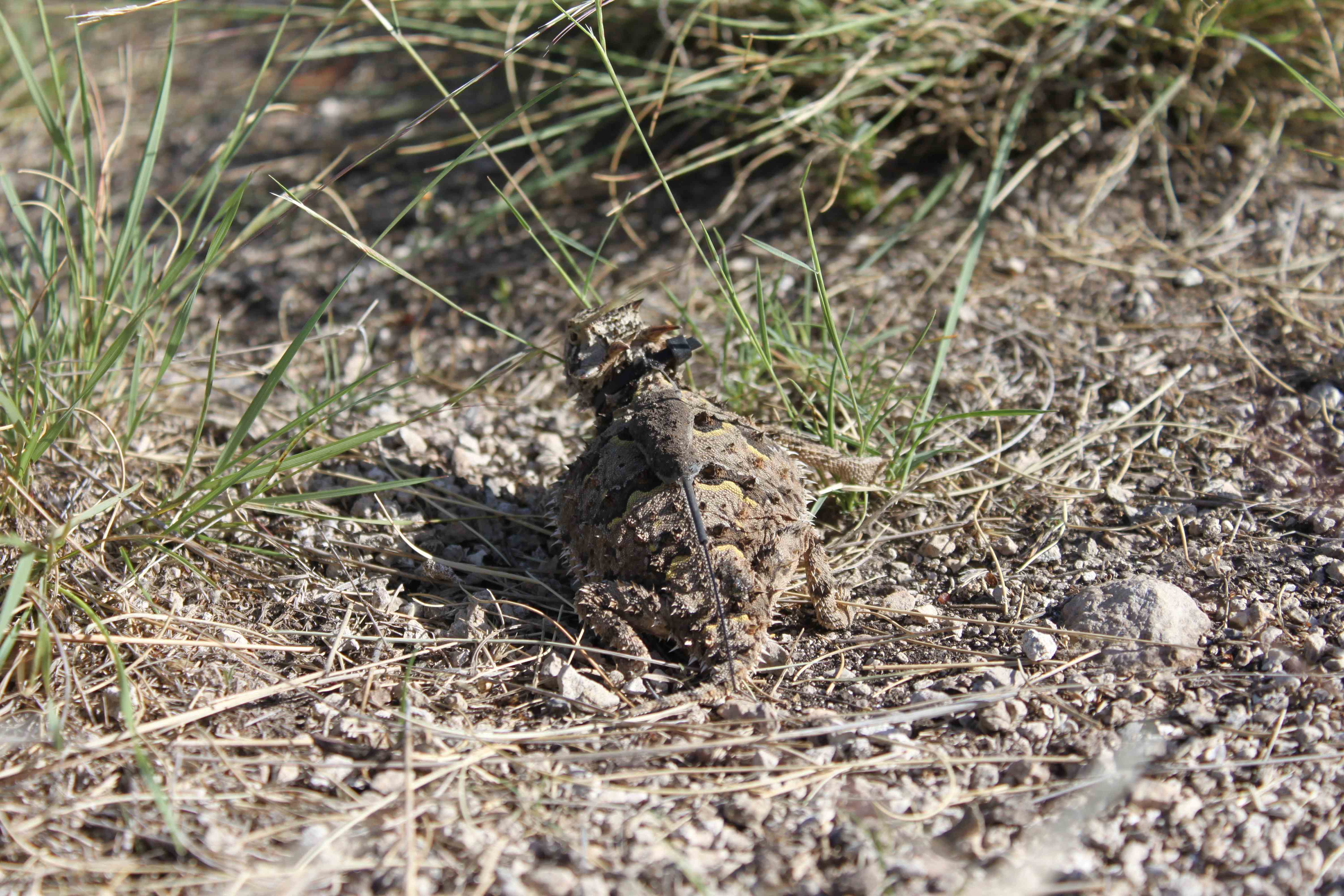
The radio transmitter, camouflaged by soil glued onto the transmitter surface, and the small plastic collar that keeps the lizard from entirely losing the tag after molting. Texas horned lizards often molt following rains and tags that would be otherwise shed are kept intact by this system. Photo: R. Granberg
As a follow up on the last horned lizard blog, we’ve spotted 2 very gravid female lizards. This is much more in line with previous studies’ timelines. Outliers should not be ignored, but it is comforting to see that other individuals in this population are showing normal reproductive activities.


No Comments