

From Honduras with Love

Lago de Yojoa. One of the many beautiful places in Honduras. Photo by Erin Strasser.
I thoroughly enjoyed my time in Honduras and hope to return in the near future. The people were friendly and hardworking, the landscape beautiful, the birds abundant, and the food delicious.
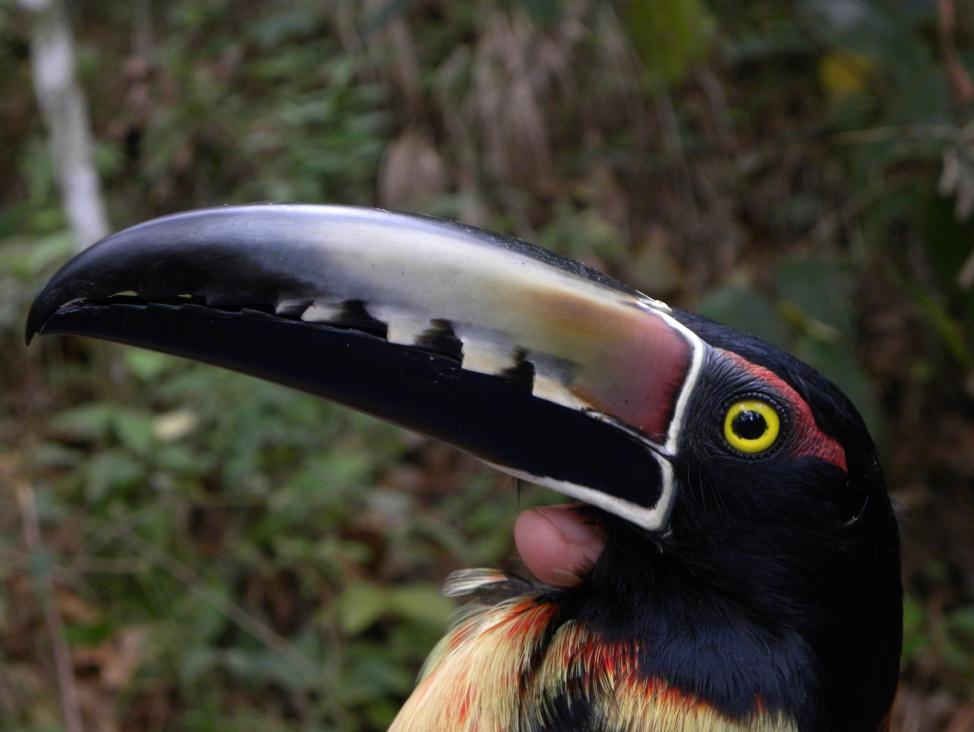
Collared Aracari, one of the resident species we encountered. Photo by Fabiola Rodriguez.
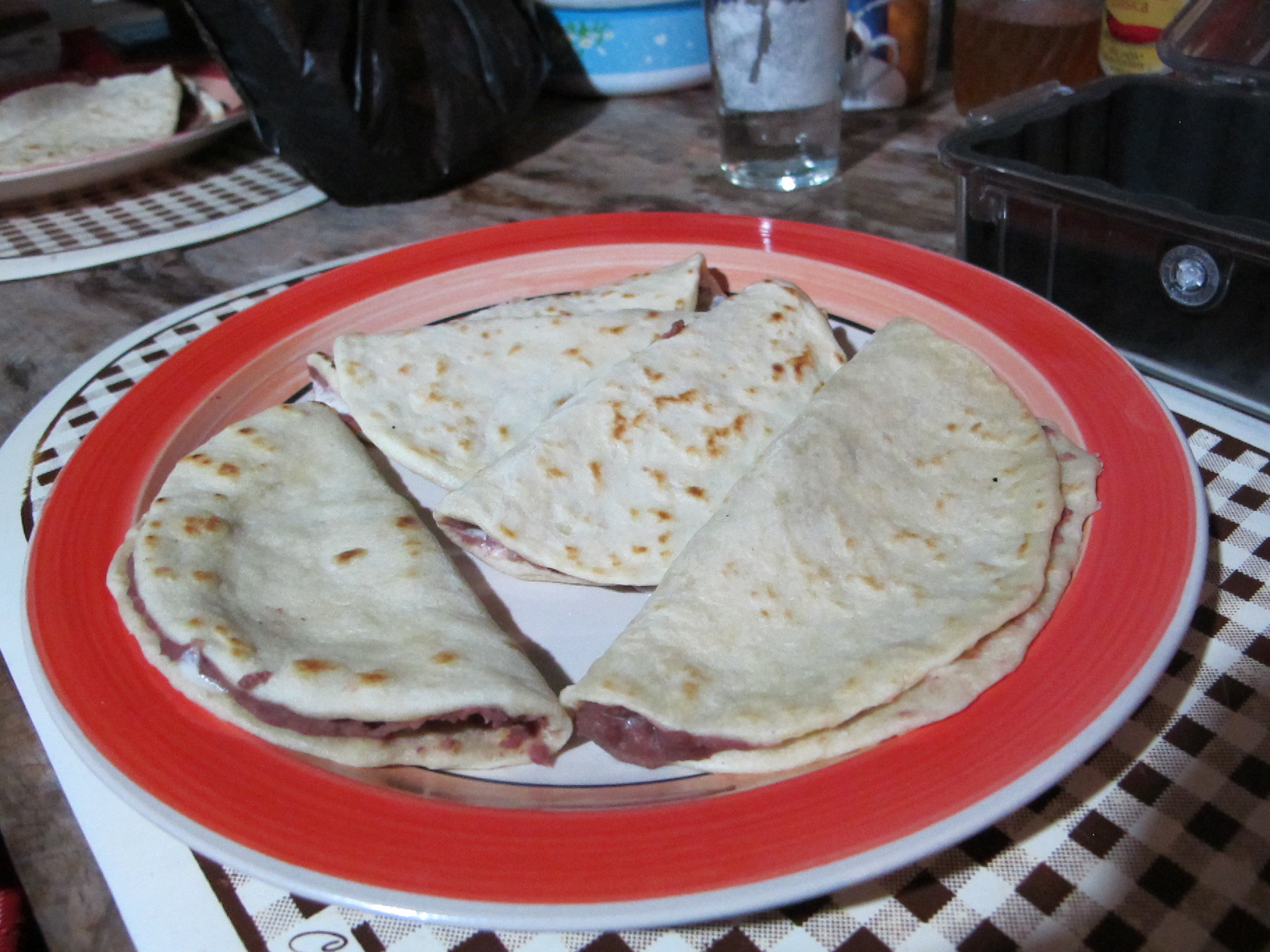
Baleadas, the comida tipica of Honduras! Photo by Erin Strasser.
One of the things I loved most about Honduras was the peoples’ pride and sense of obligation to protecting the land. Signs preaching the importance of conserving water sources and protecting the flora and fauna were scattered throughout many of the farms we visited. The coffee pickers that regularly surrounded us were genuinely interested and often stopped to chat as Fabiola and I processed birds.
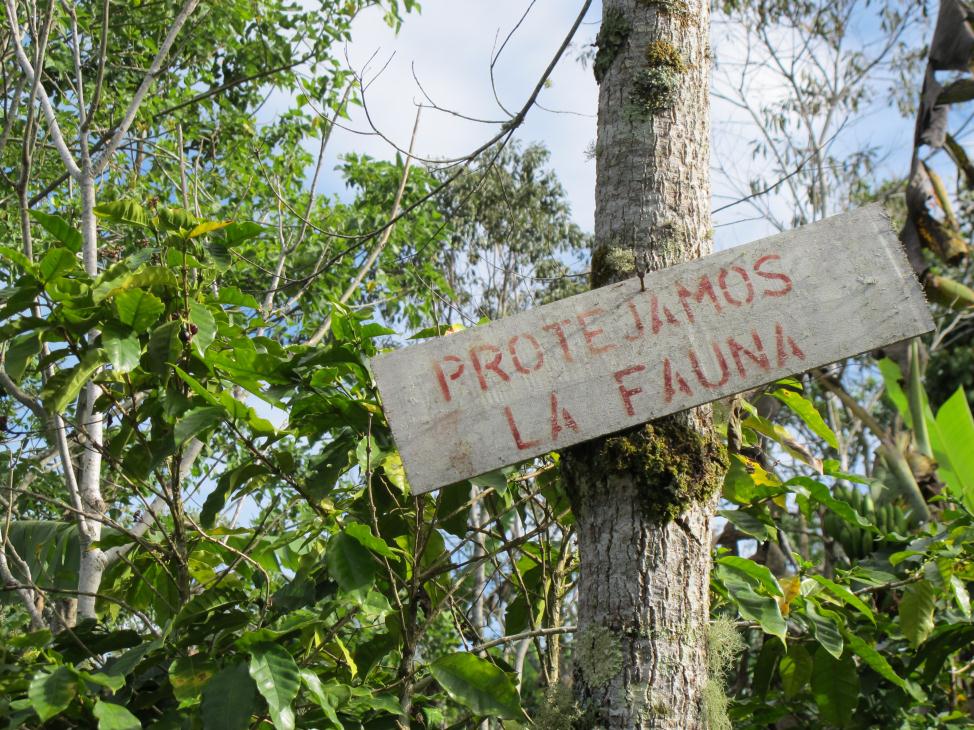
We protect the fauna. Photo by Erin Strasser.
Unfortunately it was common to observe children picking coffee during the hours they should have been in school. One morning as Fabiola and I banded, a young girl of about 8 or 9 approached us. Her curiosity was apparent and immediately she began asking questions, even following us on a few net runs. We learned that she did in fact attend school, but during coffee picking season her studies were infrequent. Will this brief experience somehow influence or guide this girl in the future?
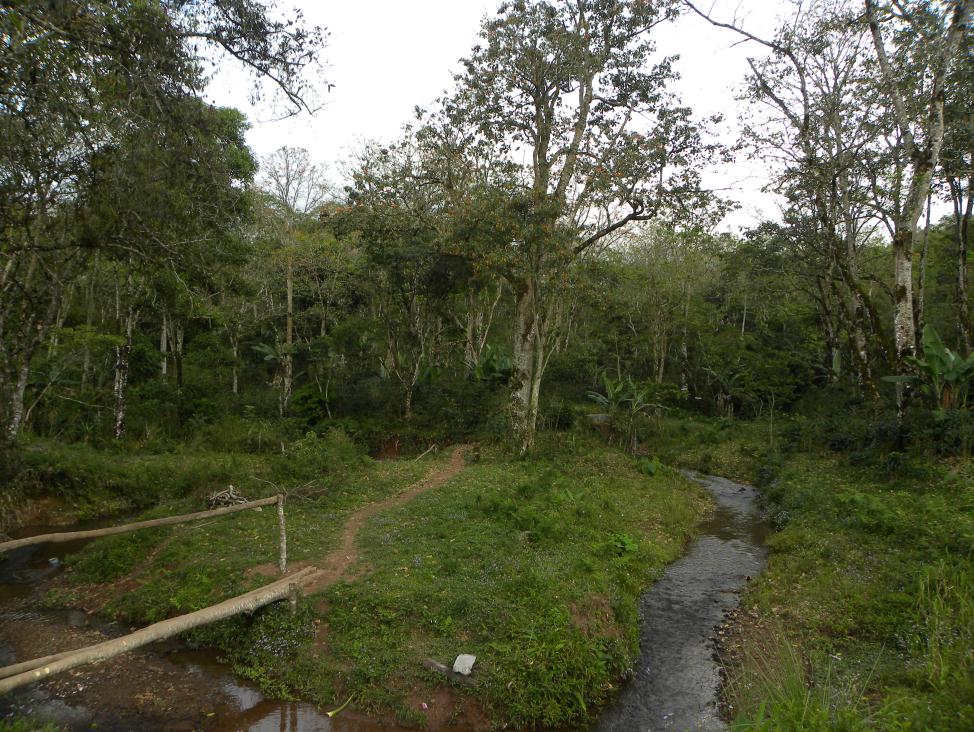
The entrance into one of the coffee plantations. Photo by Fabiola Rodriguez.
It seems as with most conservation issues there are always pitfalls and roadblocks, at times eliciting a sense of despair in even the most optimistic of people. For example, in the middle of an attempt to recapture one of our radio-tagged Wood Thrush, we discovered that that particular forest remnant was destined to destruction and a future as a sun grown coffee plantation. Machetes hacked away at the trees and vines as we hopelessly looked on, pondering the fate of the birds that will likely perish. Damn the man!
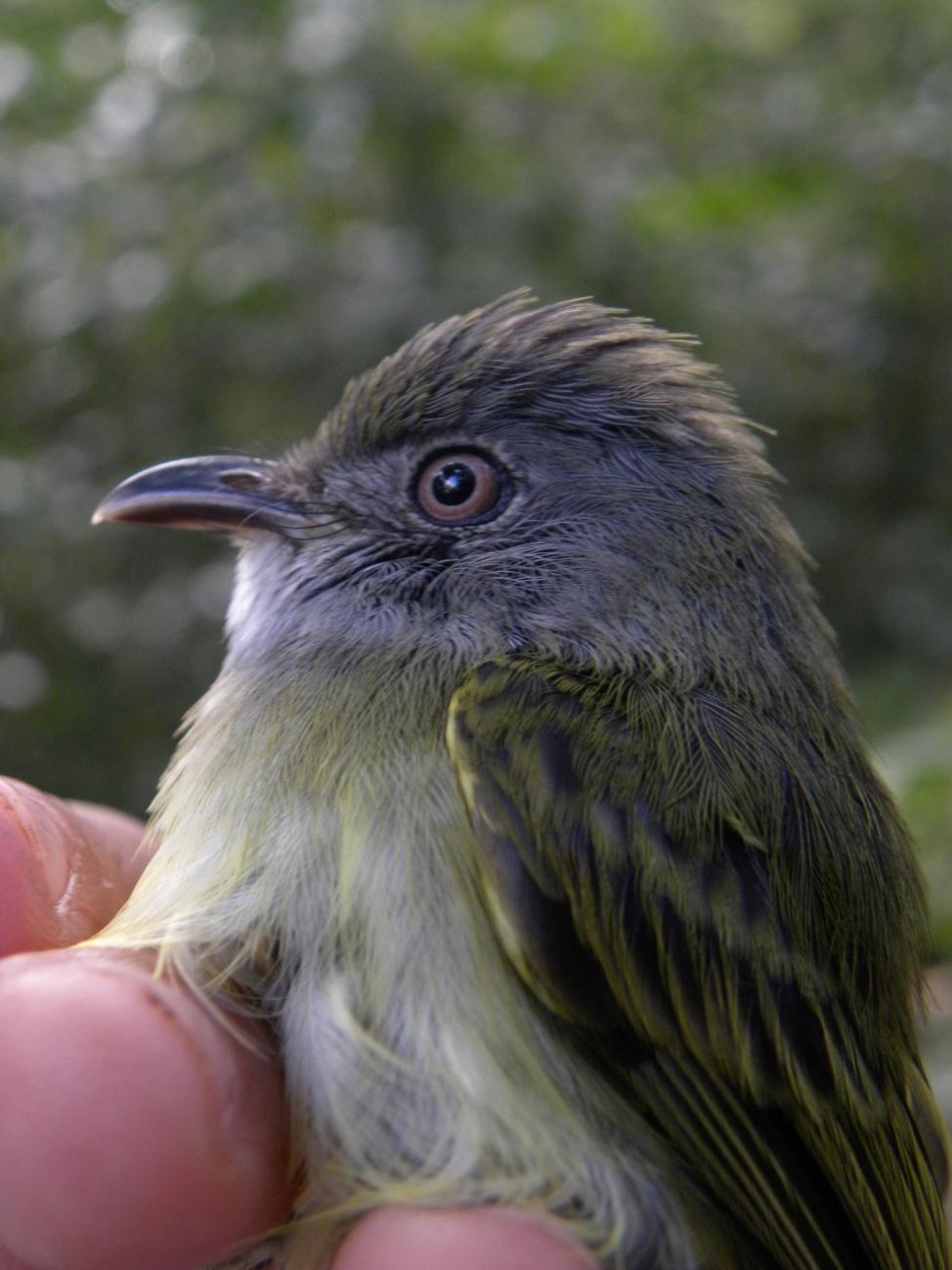
A Northern Bentbill, one of the resident species likely to be displaced after a patch of forest was chopped down. Photo by Fabiola Rodriguez.
Towards the end of our field season, the Mesoamerican Development Institute and COMISUYL organized a workshop for faculty of the Universidad Nacional Autonoma de Honduras (UNAH). Presentations highlighted sustainable coffee growing and processing practices, jetropha-based biofuels, the theory of integrated open canopy (IOC), and songbird conservation.
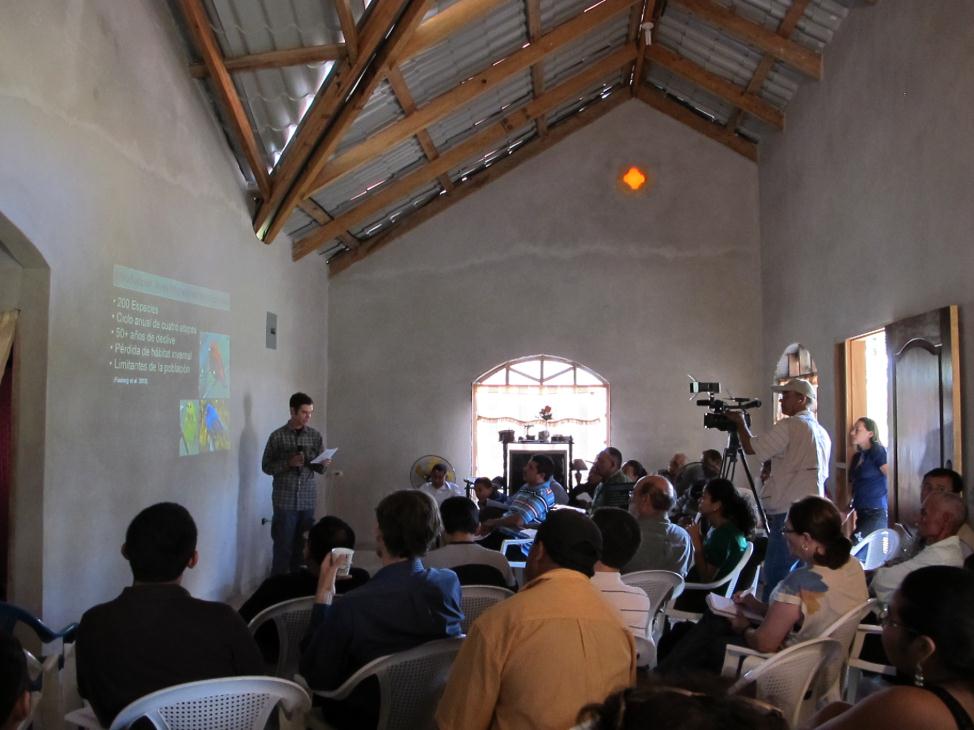
Brett talks to a group from UNAH about his research on neotropical migratory songbirds. Photo by Erin Strasser.
An integral part of the workshop was to organize and initiate a monitoring program for neotropical migrants in coffee plantations. Fabiola and Brett both gave great talks and faculty joined us in the field for a banding demonstration.

Brett and Fabiola discuss bird monitoring with faculty from UNAH. Photo by Erin Strasser.
I truly believe that consistent outreach, education, and collaboration can help promote more biodiversity friendly and environmentally sustainable actions. It will take a lot of effort and patience, particularly in less developed countries where money is hard to come by and everything is that much more logistically challenging.
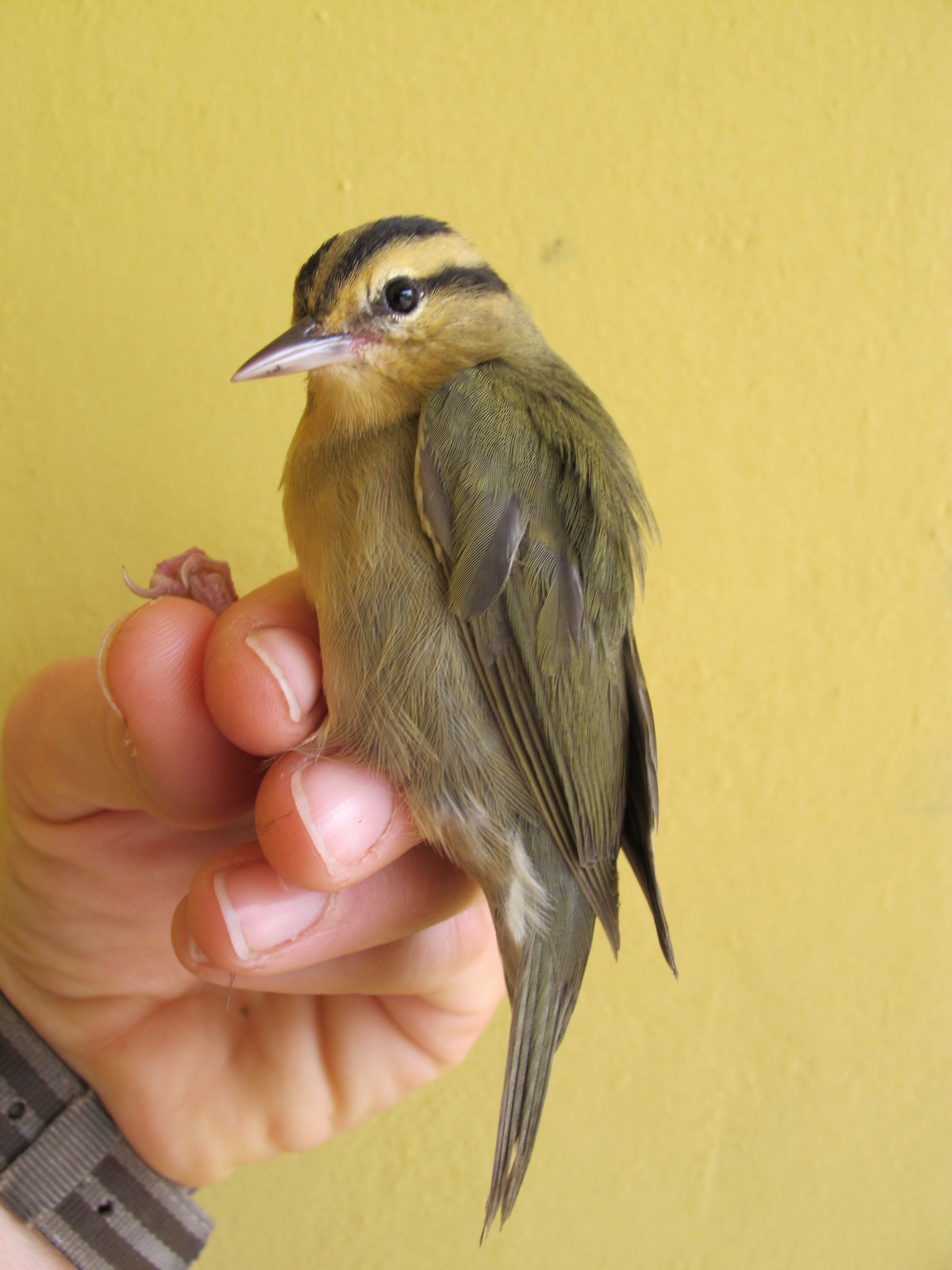
A Worm-eating warbler, one of the migratory birds that utilizes shade-grown coffee for overwintering habitat. Photo by Erin Strasser.
In the coming weeks we will release one of two or three webisodes documenting our work in Honduras. Maybe it will persuade some of you to further support research and conservation or simply buy shade-grown, bird friendly coffee.


No Comments