

Wild Nature Institute Update!
Greetings from the African savanna!
Early last year, Wild Lens created two amazing films about our research and conservation work with Masai Giraffes and migratory ungulates. Our project is an integrated research, education, and advocacy campaign to conserve the threatened wildlife of the Greater Tarangire Ecosystem of northern Tanzania. We are conducting the first-ever landscape-level population research program for 20 species of wild ungulate (hoofed mammals) in the Ecosystem to provide reliable data for land-use planning and conservation. Part of our research also includes a demographic study of giraffe using photographs for individual identification: this is one of the biggest individually based demographic studies of a large mammal ever conducted, anywhere in the world! We also are educating local villagers and decision-makers to build a coalition for community conservation, and we are publishing multi-lingual children’s books educating about the ecological and economic benefits of wildlife conservation.

Young Maasai Giraffe. Photo by Wild Nature Institute.
One of the movies Wild Lens created was “The Masai Giraffe,” which documented our photographic mark-recapture project where we are tracking over 1,500 individual giraffes in a massive, 1,300 square-kilometer area that includes two national parks, a private ranch, and village lands and hunting blocks. The movie brought to life what we are doing on the ground, which is difficult to describe in writing. We have showed the movie during presentations to schoolchildren, visiting tourists, and safari guides, and it has been a big hit. We also shared it with the primary funders of our giraffe project, the Sacramento Zoo, and they loved it!
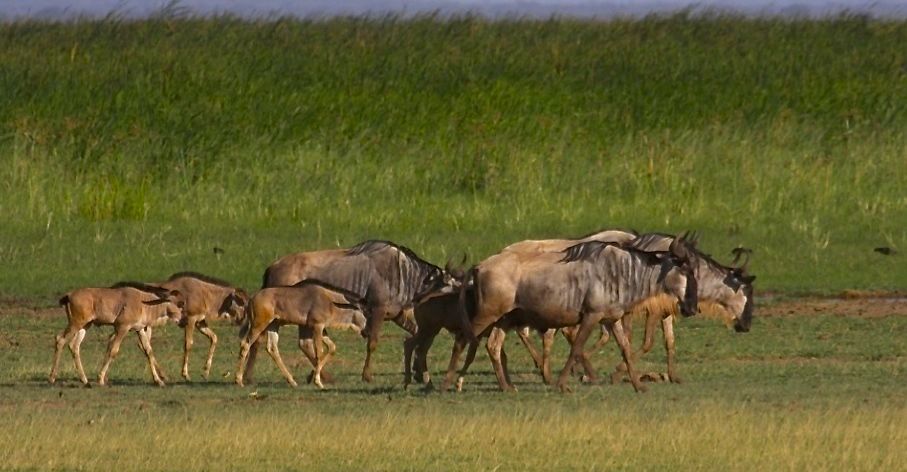
Migrating wildebeest. Photo by Wild Nature Institute.
Another movie Wild Lens created for us was “The Forgotten Migration.” This movie tells the story of the Greater Tarangire migration of wildebeests, zebras, gazelles, elands, and oryx. This is Tanzania’s second-largest migration, but the migration route is perilously threatened by land cultivation, housing, and severe poaching for bushmeat. Many people have viewed this movie on our website, and we have since been able to secure funding to conduct an educational and advocacy campaign to preserve the migratory corridor in land-use plans.
December 2013 was a major month for our campaign to protect the “forgotten migration.” On 7 December 2013 we had a book-launch party announcing the publication of our tri-lingual children’s book, The Amazing Migration of Lucky the Wildebeest. The book educates young and old about migration, wildlife, and the ecological and economic benefits of conservation in the Greater Tarangire Ecosystem. By presenting an interesting story simultaneously in Maa, Swahili, and English, The Amazing Migration of Lucky the Wildebeest promotes literacy and instills conservation values in a generation of Masai people to provide greater understanding of the connections between ecology, economy, and culture. All writing, translation and design were done pro bono! Our partner organization, Inyuat e MAA (an organization for the advancement of the Masai people), has begun delivering the books free-of-charge to children in schools in the seven villages that encompass the wildlife migration corridor. They have already distributed 500 books!

The Amazing Migration of Lucky the Wildebeest book release. Photo by Wild Nature Institute.
Also, on 17 December 2013 we organized a meeting in Mtowambu with 32 leaders from seven villages to begin the process of creating and implementing land-use plans within the “forgotten migration” corridor. The idea is to instigate land-use planning among adjacent villages that acknowledges, maps, and permanently protects the migration corridor. We will use our data from our field surveys to develop a map for them. We handed out the tri-lingual children’s book to the participants and they were pleased and impressed to see educational materials that were attractive, fun, and written in their tribal language of Maa. Follow-up meetings with leaders in individual villages will be held the next few months, and will be spearheaded by our Masai partners.
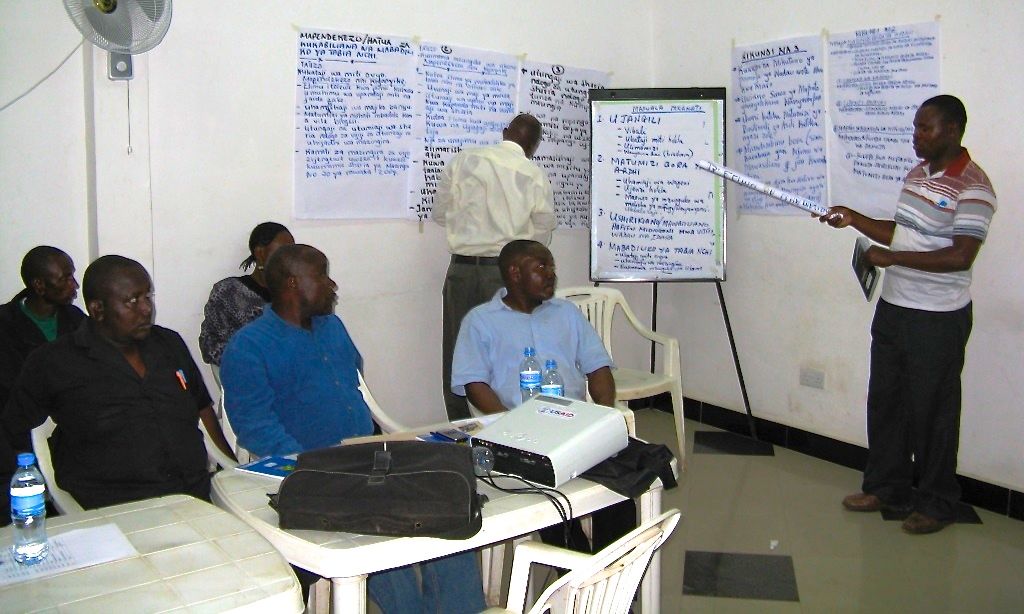
WNI working with Mtowambu community. Photo by Wild Nature Institute.
We are incredibly grateful to Wild Lens for creating such beautiful and compelling visual documentation of our work. These savanna animals are so photogenic and the landscape is so magnificent, and it helps us to be able to use that beauty in video format to inform and inspire people to care and support our work. The movies also help bring us to life—to let our funders know that we are in the field, working hard to conserve these wondrous creatures.
For more information about the great work that the Wild Nature Institute is doing, visit http://www.wildnatureinstitute.org.


No Comments